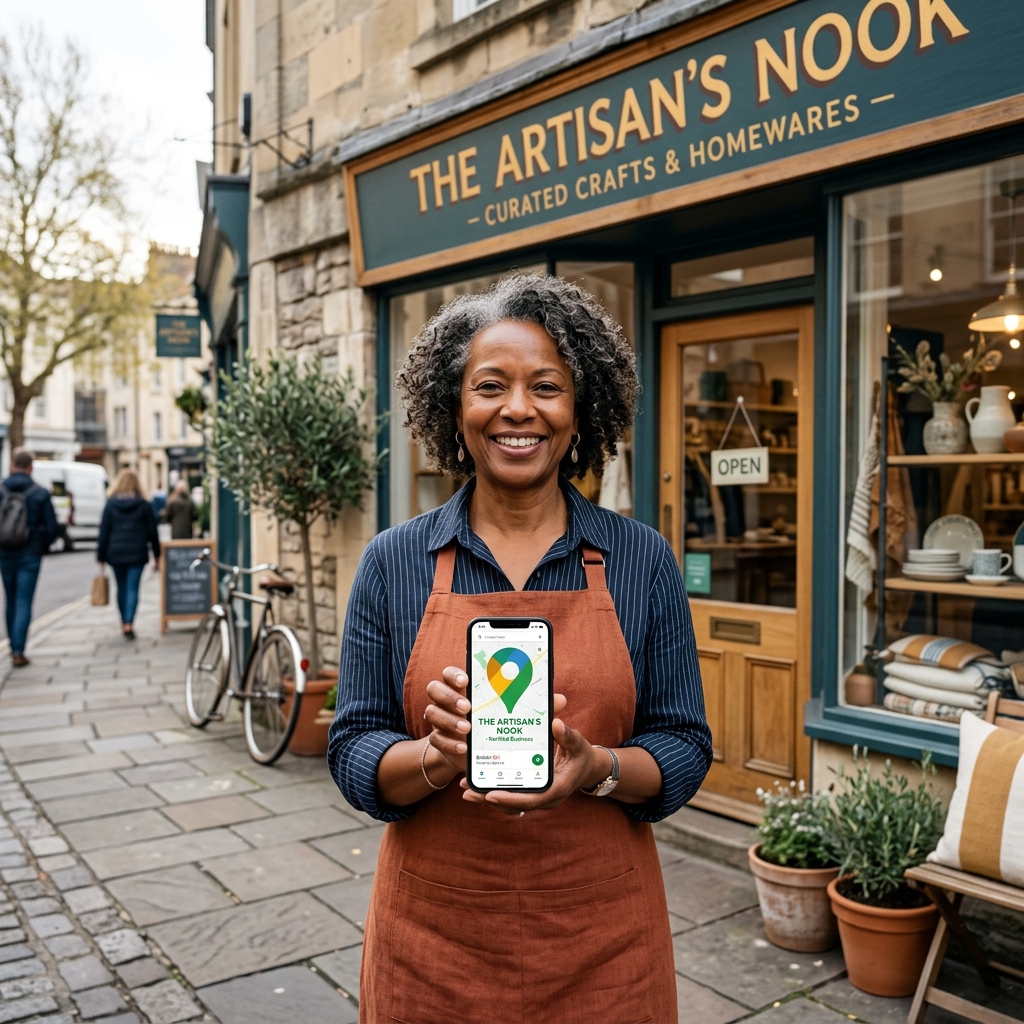
What Is Local SEO and Who Needs It
Local SEO is the discipline of optimising your business's digital presence — your website, Google Business Profile, citations, and online reputation — to rank prominently when people in your area search for products or services you offer. Unlike traditional SEO, which targets global or national audiences, local SEO is geographically constrained and time-sensitive. The person searching for "emergency plumber near me" at 11pm on a Tuesday is an extraordinarily high-intent prospect. If your business doesn't appear in the top three local results (the "map pack"), you are effectively invisible to them.
The commercial case for local SEO is staggering. According to Google's own data, 76% of people who conduct a local mobile search visit a physical business within 24 hours, and 28% of those searches result in a purchase. These aren't passive browsers — they're buyers with urgent intent. For businesses that serve a defined geographic area, local SEO isn't a marketing option; it's one of the most direct lines between digital visibility and cash register activity available.
Who needs local SEO? The answer is almost any business that serves customers within a specific geographic radius. This includes restaurants, cafes, and hospitality businesses; medical and dental practices; legal and financial services firms; tradespeople — plumbers, electricians, builders; retail shops; estate agents; gyms and fitness studios; automotive services; salons and beauty businesses; marketing and professional services agencies serving specific cities. Even businesses that operate primarily online but have a physical office address benefit enormously from strong local presence, because it builds trust with local prospects who are weighing up whether to engage.
How the Google Map Pack Works
The Google Map Pack — also called the Local Pack or 3-Pack — is the set of three business listings that appears at the top of Google's search results for local queries, accompanied by a map. It sits above organic results and below paid ads, making it prime digital real estate. Research from BrightLocal consistently shows that the top position in the map pack attracts between 33–44% of all clicks for local queries, making it arguably more valuable than the #1 organic position for commercial intent searches.
Google's algorithm for ranking local results is governed by three explicit factors, which Google itself has publicly disclosed: Relevance, Distance, and Prominence. Understanding how each works gives you a clear blueprint for what to optimise.
Relevance is how well a local listing matches what someone is searching for. This is determined by the completeness of your Google Business Profile — your primary category, secondary categories, services listed, business description, and the content of your website. A plumbing company that lists "Emergency Plumber," "Boiler Repair," and "Blocked Drain Specialist" as services will rank more relevantly for each of those queries than one that only categorises itself as a "Plumber."
Distance is the geographic proximity of your business location to the person performing the search — or to the location specified in the query. You cannot fully control distance (unless you physically relocate), but you can optimise around it by creating geo-targeted landing pages for surrounding areas, clearly defining your service area in your GBP, and ensuring your address is consistently stated across the web. Service-area businesses that hide their address should define their service radius carefully in their GBP settings.
Prominence is the factor you can most directly and dramatically influence. It reflects how well-known and reputable your business is, both online and offline. Google measures prominence through the volume and quality of reviews, your star rating, backlinks pointing to your website, citations across directories and data aggregators, mentions in news and local media, and the overall richness of your GBP (photos, posts, Q&A activity). Prominence compounds over time — it's the local SEO equivalent of domain authority.
Google Business Profile: Complete Optimisation Guide
Your Google Business Profile (GBP) — formerly Google My Business — is the single most important asset in your local SEO stack. It is the direct interface between your business and Google's local algorithm, and it controls what information appears in the map pack, Google Maps, and the Knowledge Panel that appears when someone searches your brand name directly. An incomplete or poorly optimised GBP is the number-one reason businesses fail to appear in local results despite having a legitimate local presence.
The first step is claiming and verifying your GBP if you haven't already. Navigate to business.google.com, search for your business, and claim it. Google will verify your ownership via postcard (5–7 business days), phone call, or email, depending on the business type. Once verified, the real optimisation work begins. A fully completed GBP is 70% more likely to attract location visits according to Google's own research — but "complete" means much more than just filling in your address and phone number.
Category Selection
Your primary category is the single most powerful GBP signal. It tells Google what type of business you are and determines which searches you're eligible to appear in. Choose your primary category with precision — it should reflect your core, highest-revenue service. If you're a restaurant that also does takeaway, your primary category should be your dominant dining type (e.g., "Italian Restaurant"), not "Restaurant" generically. You can add up to nine additional secondary categories, and you should use all of them strategically. Each additional category makes you eligible for more query variations. Research your top competitors' categories using tools like GMBspy or simply by clicking through competitor profiles — this reveals what categories are driving results in your niche.
Business Description
Your GBP business description allows up to 750 characters and appears in your Knowledge Panel. This is not a place for keyword stuffing — Google is sophisticated enough to detect keyword spam and may suppress profiles that abuse this field. Instead, write a genuine, compelling description that naturally incorporates your primary service, key location, and a differentiating statement. Structure it as: what you do → who you serve → why choose you → your location. For example: "RR IT Zone is a London-based digital growth agency specialising in local SEO, AI automation, and Shopify development. We work with established businesses across the UK that need precision digital systems — not generic agency retainers." This naturally includes service terms, geographic terms, and a positioning statement without feeling forced.
Photos and Visual Content
Google's data shows that businesses with photos receive 42% more requests for directions and 35% more click-throughs to their websites than those without. Photos serve both as trust signals for users and as activity signals to Google's algorithm. Upload a minimum of 10–20 high-quality photos when you launch, covering your exterior (so customers recognise your location), your interior, your team, your products or services in action, and any certifications or awards. Add new photos regularly — at least 2–4 per month. Google prioritises active profiles, and photo recency is a recognised freshness signal. Critically, always add geo-metadata to your photos using a tool like GeoImgr before uploading, as location-tagged photos reinforce your geographic relevance signals.
Q&A Management
The Questions & Answers section of your GBP is dramatically underutilised and misunderstood. Anyone can submit a question — including competitors or curious prospects — and anyone can answer them. If you don't proactively populate this section, you lose control of the narrative. Seed this section yourself by submitting the 5–10 most common questions your customers ask, then answer them thoroughly as the business owner. This content is indexed by Google and can appear in search results. Answers should naturally include keywords (your services, your location, your differentiators) without being spammy. Monitor new questions weekly and answer promptly — unanswered questions erode trust signals.
Additional GBP optimisation elements include: keeping your hours accurate (including special holiday hours — mismatched hours are a top trust-loss signal); regularly publishing GBP Posts (these function like social media updates directly on your profile); listing all of your services with individual descriptions and pricing where applicable; enabling messaging if your team can respond within 24 hours; and linking your GBP directly to the most relevant landing page on your website rather than just your homepage.
Local Keyword Research
Local keyword research differs from standard SEO keyword research in one critical dimension: geography is part of the keyword. A national SEO campaign might target "accountant services" — but a local campaign must target "accountant Manchester," "chartered accountant near me," or "accountant Didsbury." The challenge is that local keywords are often lower search volume individually but exceptionally high intent collectively. A search for "emergency boiler repair Leeds tonight" may generate only 50 searches per month — but every one of those searchers needs a boiler fixed immediately and is almost certainly going to call or book a business.
There are three primary local keyword patterns to target. First are explicit geo-modified keywords: "[service] + [city/town/borough]." These are the foundational terms. For a dental practice in Bristol, this means targeting "dentist Bristol," "dental implants Bristol," "teeth whitening Clifton" (a specific Bristol neighbourhood), and so on. Create dedicated service+location landing pages for each significant geographic term — never try to rank a single page for multiple cities. Second are "near me" and intent signals: terms like "near me," "closest," "open now," and "24 hour." These are predominantly mobile queries and are largely handled by Google's real-time location data rather than keyword matching, but including phrases like "conveniently located in [area]" and ensuring your location data is consistent signals to Google that you serve that proximity. Third are long-tail local queries that indicate specific intent: "how much does [service] cost in [city]," "[problem] + [city]," "best [service] for [specific type] in [location]." These are gold — they're easier to rank for and indicate high purchase readiness.
For tools, Google's own Keyword Planner gives you local search volume estimates. Ahrefs and Semrush both offer location-filtered keyword research with SERP analysis. BrightLocal's local SERP checker lets you simulate searches from specific geographic coordinates — invaluable for understanding what a user 1 mile from your location actually sees. Don't overlook Google Search Console — filter your performance report by queries containing your city name to find local keywords you're already ranking for, even weakly, and prioritise strengthening those pages first.
A high-priority tactic for is to build a local content hub on your website. This means creating neighbourhood or area-specific pages ("We serve [District A], [District B], and [District C] across Greater Manchester"), local guides ("Best time to hire a plumber in Leeds — and what to watch out for"), and locally relevant FAQ content. This content cluster establishes topical authority for your city and surrounding service area, creating a web of locally relevant pages that all reinforce each other's geographic relevance signals.
Local Citations and NAP Consistency
A local citation is any online mention of your business's Name, Address, and Phone number — collectively known as NAP. Citations can appear on business directories (Yell, Yelp, Thomson Local, Cylex), social platforms, review sites, data aggregators, industry-specific directories, local chambers of commerce websites, and news articles. Google uses the consistency and volume of citations as a trust signal: if your business's NAP appears identically across hundreds of authoritative sources, Google becomes more confident that your business is legitimate, established, and correctly located.
NAP consistency is not optional — it is foundational. Even minor inconsistencies create confusion and fragment your local authority. A phone number listed with spaces in one directory and without spaces in another, "Ltd" included in the company name on one site but omitted on another, or an old address remaining live on five directories after you moved — all of these issues dilute your citation strength. Before building new citations, audit your existing ones using tools like BrightLocal's Citation Tracker, Moz Local, or Whitespark's citation finder. Correct any inconsistencies you find before expanding your footprint.
There are three tiers of citation sources to target systematically. Tier 1 — Core Data Aggregators: In the UK, the most important data aggregators are Data Axle (formerly InfoUSA), Acxiom, and Neustar Localeze. These companies feed business data to hundreds of downstream directories automatically. A correct listing at the aggregator level propagates your correct NAP across the web without requiring individual directory submissions. Tier 2 — High-Authority General Directories: Google Business Profile (already covered), Bing Places, Apple Maps, Facebook Business Page, Yell.com, Thomson Local, Scoot, FourSquare, Yelp UK, and Companies House (for limited companies). All of these are critical and must be claimed directly. Tier 3 — Niche and Local Directories: Industry-specific directories (TrustATrader for tradespeople, Treatwell for salons, Bark.com for professionals), local council business directories, local newspaper business listings, and local association member pages. These citations carry less raw authority but add geographic specificity that strengthens your local relevance.
Local Link Building
Backlinks remain a critical ranking factor in both traditional SEO and local SEO, but the characteristics of valuable local links differ from national link building. For local SEO, a link from a respected local newspaper, a city council website, or a regional business association carries far more local ranking weight than a generic guest post on a national blog. The geographic relevance of the linking domain is a key quality dimension — Google understands that a link from Manchester Evening News pointing to a Manchester plumber is a meaningful locality endorsement.
The most effective local link building strategies are grounded in genuine community involvement. Local sponsorships are among the highest-ROI link sources available to local businesses — sponsoring a local sports team, charity event, school, or community initiative typically results in a link from the organisation's website, often on a page that Google interprets as a local entity authority signal. The key is to sponsor organisations with genuine websites (not just social media pages) that will include a link to your site. Local press and PR is another powerful approach: journalists at local newspapers and regional news sites frequently need expert sources and comment. Position yourself as the go-to expert in your sector for local media enquiries. A quoted expert in a Manchester Evening News article on property market trends, for instance, typically includes a citation link to the estate agent's website.
Chamber of Commerce membership delivers a reliable, high-authority local link in most UK cities. The British Chambers of Commerce and local equivalents (Federation of Small Businesses, local business improvement districts) typically include member directory pages with do-follow links. The authority of these domains is consistently high, and the geographic relevance is explicit. Similarly, local partnership pages — where complementary businesses cross-link (a wedding photographer linking to preferred venues, a dentist linking to their dental lab) — create a local link ecosystem that Google increasingly recognises as a natural authority signal.
Don't overlook local resource pages and "best of" lists. Many city-specific blogs, local authority websites, and community websites publish resource guides ("Best Plumbers in Leeds," "Recommended Accountants in Glasgow"). A direct, personalised email to the site owner — demonstrating why your business deserves inclusion — has a surprisingly high success rate. These links are often no-cost, highly relevant, and delivered from pages with clear geographic topicality.
Review Strategy: Getting and Managing Reviews
Reviews are simultaneously a direct ranking signal, a click-through driver, and a conversion factor. Google has confirmed that review volume, rating score, and recency all influence map pack rankings. BrightLocal's Local Consumer Review Survey found that 98% of consumers read online reviews for local businesses at least occasionally, and 76% always or regularly read reviews. A consistent, ethical review generation strategy is not a vanity exercise — it is a core revenue function for any local business.
The most effective review generation method is the simplest: ask at the peak of satisfaction. For service businesses, this is immediately after a successful service delivery. For retail, it's at the point of purchase. A brief verbal request ("If you're happy with the work, we'd really appreciate a Google review — it helps us a lot") combined with a QR code on a card or receipt that links directly to your GBP review page removes all friction. Research by Whitespark shows that over 70% of customers will leave a review if asked directly at the right moment. Never incentivise reviews — Google's Terms of Service prohibit this and can result in profile suspension. Never create fake reviews — Google's machine learning is increasingly adept at detecting and removing these, and the reputational damage if discovered is severe.
Review diversity matters too. While Google is the most critical platform, reviews on Yelp, Trustpilot, Facebook, and industry-specific platforms (TripAdvisor for hospitality, Checkatrade for trades) all contribute to your overall prominence signal. Maintain a review generation programme across multiple platforms, rotating which you prioritise each quarter. Set a realistic target: if you serve 50 customers per week, aiming for 2–4 new Google reviews per week is achievable and generates the recency signal Google rewards.
Responding to reviews is non-negotiable. Google has confirmed that responding to reviews improves your local ranking by demonstrating engagement and prominence. Respond to every single review — positive and negative. For positive reviews, personalise your response (don't use templates), mention the service they used, and thank them genuinely. For negative reviews, respond calmly and professionally within 24 hours, acknowledge their experience without admitting fault where the complaint is spurious, offer to resolve the issue offline, and provide a direct contact. A well-handled negative review response often converts potential detractors into advocates — and it demonstrates to prospective customers that you are responsive and professional.
Local Schema Markup
Schema markup — also called structured data — is machine-readable code that you add to your website's HTML to help search engines understand exactly what your business is, where it's located, and what it offers. For local businesses, the LocalBusiness schema (and its subtype schemas such as Restaurant, MedicalBusiness, LegalService, etc.) is an essential technical SEO component that directly supports local rankings and enhances how your business appears in search results.
LocalBusiness schema tells Google your precise NAP in a structured, unambiguous format — reinforcing the same information in your GBP and across citations. It also allows you to specify your hours of operation, geographic coordinates, priceRange, aggregateRating (pulling from reviews), and the specific services you offer. When Google can read all of this data in a structured format directly from your website, it significantly strengthens your local presence because your website is now a primary, authoritative source of your business data rather than relying solely on third-party citations.
A standard LocalBusiness JSON-LD schema block contains key fields such as the @context and @type (e.g., LocalBusiness or a specific subtype like ProfessionalService), the business name, image URL, official website url, contact telephone number, physical address details (streetAddress, addressLocality, addressRegion, postalCode, and addressCountry), geographic geo coordinates (latitude and longitude), openingHoursSpecification specifying business hours by day, and social media links under sameAs (including your Google Maps CID link and Facebook page).
For multi-location businesses, implement a separate LocalBusiness schema block for each location, using the specific address and telephone for each. Use the branchOf property to link branch schemas to the parent organisation. Validate your schema implementation using Google's Rich Results Test tool and Schema.org's validator before deploying. Errors in schema can result in it being ignored entirely — validation is a mandatory final step.
Local SEO vs Google Ads for Local Businesses
One of the most common strategic questions local businesses face is whether to invest in local SEO, Google Ads (specifically Local Services Ads and search campaigns), or both. The honest answer is that these two channels have fundamentally different time profiles, cost structures, and risk profiles — and the optimal strategy for most established businesses is a sequenced combination of both.
| Factor | Local SEO | Google Ads (Local) |
|---|---|---|
| Time to Results | 3–6 months (compounding) | Immediate (once live) |
| Cost Model | Investment in time/service; traffic is free | Pay per click; stops when budget stops |
| Long-Term ROI | High — compounds over time | Moderate — linear with spend |
| Click Share | ~33–44% (map pack position 1) | ~10–15% (typical local ad CTR) |
| Trust Signal | High — organic results are trusted | Lower — "Ad" label reduces trust for some users |
| Competitive Risk | Rankings can fluctuate with algorithm updates | Immediate if outbid by competitors |
| Best For | Sustained, scalable local visibility | Immediate leads; new business launches; seasonal peaks |
The hybrid strategy that consistently delivers the best results for local businesses works as follows: Use Google Ads — particularly Google's Local Services Ads (LSAs), which show above standard paid results and carry a "Google Guaranteed" badge — to generate immediate leads in the first 3–6 months while your local SEO programme builds momentum. As your GBP, citations, reviews, and local content compound into strong organic rankings, gradually reduce paid dependency and allow the organic channel to carry an increasing share of lead volume. By month 9–12, most businesses with consistent local SEO execution see organic conversion costs significantly below their paid channels, creating a sustainable competitive advantage that competitors can't easily buy their way out of.
Google Local Services Ads deserve special mention in the local landscape. LSAs appear at the very top of the search results page — above traditional text ads and above the map pack — and only charge when a customer contacts you directly through the ad. Google verifies businesses that appear in LSAs, meaning the "Google Guaranteed" or "Google Screened" badge carries genuine trust weight with consumers. For high-intent service categories (emergency trades, legal services, financial advisors), the combination of top-of-page placement and the trust badge makes LSAs among the highest-converting local paid channels available.
Tracking Local SEO Performance
Local SEO without measurement is guesswork. A rigorous tracking framework allows you to understand which tactics are delivering results, where to double down, and how to report meaningful business outcomes — not just vanity metrics — to your stakeholders. The key measurement layers for local SEO are GBP insights, local rank tracking, website analytics, and conversion tracking.
Google Business Profile Insights is your first and most immediate data source. Inside your GBP dashboard, you can see how customers found your profile (direct searches for your brand vs. discovery searches for your category), what actions they took (website clicks, direction requests, phone calls), and how many views your profile and photos received. These metrics tell you whether your GBP is generating meaningful engagement, and tracking them monthly allows you to correlate optimisation actions with outcome changes. Key metrics to monitor: Total searches, Direction requests (a strong intent signal), Website clicks from GBP, Phone calls from GBP, and Photo views relative to competitor averages.
Local rank tracking is more nuanced than standard rank tracking because local results vary by the searcher's physical location. A business ranked #1 in the city centre may not appear in the top 3 for searches conducted in a suburb 3 miles away. Tools designed specifically for local rank tracking address this: BrightLocal offers grid-based rank tracking that shows your position at multiple geographic points across your service area simultaneously — displaying a heatmap of where you rank well and where you have gaps. Whitespark and Local Falcon offer similar grid-tracking functionality. Standard rank trackers (Ahrefs, Semrush) show your "average" position for local keywords but don't capture the geographic granularity that local businesses need.
Website analytics via Google Analytics 4 should be segmented to capture local organic specifically. Set up geographic filters to see what percentage of your organic traffic originates from your target cities and regions. Create custom segments for organic traffic from local keywords (filter by landing pages that are your geo-targeted service pages). Monitor organic traffic to your location-specific pages separately from your global traffic — these pages are your local SEO workhorses and deserve individual performance tracking.
Conversion tracking closes the loop between local SEO activities and actual business outcomes. At minimum, track: phone calls (via Google's call tracking in GBP and a call tracking solution like CallRail for website calls), form submissions from local service pages, direction requests, and for e-commerce or booking-enabled sites, local revenue attribution by landing page. When you can demonstrate that your local SEO investment in Manchester generated 47 phone calls, 23 direction requests, and 14 confirmed bookings in a given month — with average order values to match — you have an undeniable business case for continued investment.
Frequently Asked Questions
Local SEO typically begins showing measurable results within 3–6 months for most businesses. Map pack improvements can emerge faster — sometimes within 4–8 weeks — once your Google Business Profile is fully optimised, NAP citations are consistent, and you start accumulating reviews. Competitive markets in major cities like London may take 6–12 months for top-3 map pack positions. The key is that local SEO compounds — results continue improving for years after the initial investment, unlike paid advertising which stops the moment you stop spending.
Google's local ranking algorithm weighs three primary factors: Relevance (how well your GBP and website match the search query), Distance (proximity of your business to the searcher), and Prominence (how well-known your business is, measured by reviews, citations, backlinks, and GBP activity). BrightLocal's Local Search Ranking Factors study found that GBP signals (especially category, completeness, and review signals) and on-page SEO signals were the two highest-weighted ranking factor groups. Review signals — volume, recency, diversity, and responses — have increased in weight year over year.
To appear in the map pack, you need a verified Google Business Profile, which requires a verifiable address. However, service-area businesses (plumbers, consultants, cleaners) can hide their address publicly and define a service area instead, and can still rank in local results. That said, a genuine physical address — particularly in or near the city centre — provides a significant distance advantage for nearby searches. If you work from home or a coworking space, you can use that address for verification purposes while hiding it publicly, giving you the verification benefit while protecting your privacy.
There is no magic number, but in competitive niches, top-3 map pack positions in UK cities typically hold between 50–200+ reviews. More important than volume is recency and rating — a steady stream of new reviews signals active prominence to Google. A business with 30 recent, high-quality reviews often outranks one with 200 old reviews from years ago. Aim for a consistent 4.5–5.0 star average and a rate of at least 2–4 new reviews per month as a sustainable baseline target for most local businesses.
NAP stands for Name, Address, Phone number — the three core data points that identify your business across the web. NAP consistency means these details are identical across every directory, citation source, your website, and your GBP. Inconsistencies confuse Google's entity resolution system and dilute your local authority signal. Even minor differences like "St." versus "Street," "Ltd" versus "Limited," or a legacy phone number remaining live on old directories can fragment your citation footprint and suppress local rankings. Before building new citations, always audit and correct existing ones first.
For most local businesses, local SEO delivers a significantly better long-term ROI than Google Ads alone. Organic map pack results receive far more clicks than paid local ads, and the traffic is free once rankings are achieved. However, the two channels complement each other: Google Ads deliver immediate visibility while SEO compounds over 3–6 months. The optimal strategy for most local businesses is to use targeted Google Ads (especially Local Services Ads) initially while building local SEO authority simultaneously — then gradually shift budget as organic rankings deliver sustainable traffic, reducing your blended cost per lead over time.
Upgrade Your Digital Systems with RR IT Zone
Our technical architects and automation experts will audit your current site performance, SEO structures, and operational processes to deliver a clear, customized execution plan. We've built dozens of authority engines and automation setups that drive real, measurable ROI for global enterprises.